Size
Your email has been successfully removed.
Click & Collect
My Cart
Subtotal:
Delivery:
Product(s) added to Favorites
Product (s) removed from wishlist
Item(s) added to cart
My CartAdded to comparator
Removed from comparator
Where should we send your order?

To start the search enter at least 3 characters of a description, brand or reference number
Word searched
Size
Your email has been successfully removed.
Size
Your email has been successfully removed.

Filter and Sort
Size
Your email has been successfully removed.
Size
Your email has been successfully removed.
Size
Your email has been successfully removed.
With greater durability and resistance, 18k gold rings maintain their original shine and color, thus becoming more valuable and eternal. These are pieces of jewelry that will certainly be passed down from generation to generation, without losing their meaning and value. 18k gold jewelry contains 75% pure gold.
| Use to view more |
|---|
18K Gold in Engagement Rings: the International Standard in Fine Jewelry
18K gold is the most widely used alloy worldwide in engagement rings and premium jewelry, containing 75% pure gold and 25% other metals that provide the durability needed for everyday wear.
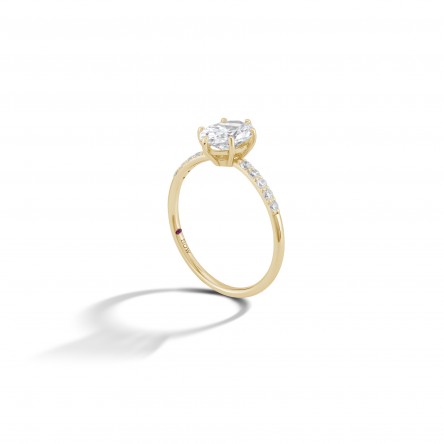
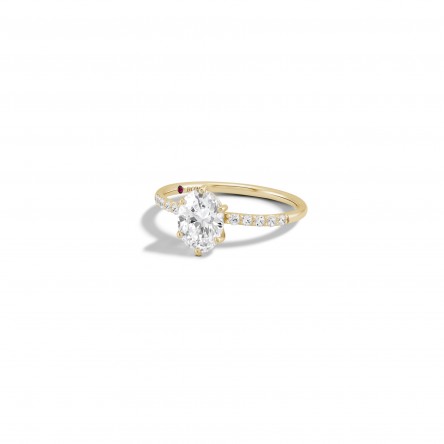
At BlueBird, the selection of 18K gold jewelry for engagements includes more than 349 pieces, predominantly from the Bow Gold and Diamonds brand, with prices ranging from €599 for diamond rings and earrings to premium pieces exceeding €3,000. The collection includes engagement rings, bridal earrings, tennis bracelets, and pendants — all crafted in 18K gold, all featuring diamonds or precious gemstones such as emerald, ruby, sapphire, topaz, and aquamarine. It serves as a technical introduction for those who want to understand why 18K gold is the standard choice for this important moment in life, as well as a practical starting point for those who have already made their decision and want to explore the catalog.
What Is 18K Gold: Technical Composition
18K gold is an alloy containing 75% pure gold (18 parts out of 24) and 25% other metals — usually silver, copper, and/or palladium, depending on the desired color.
Pure gold (24K) is too soft for everyday jewelry — it scratches easily, can become deformed in pieces with set gemstones, and cannot withstand the tension required to securely hold diamonds or other stones. For this reason, in international fine jewelry, pure gold is always mixed with other metals to provide strength. The 75/25 ratio of 18K gold represents the standard balance between two conflicting objectives: having enough gold to ensure a rich color, high material value, and chemical stability (gold does not oxidize or lose its shine); and having enough alloying metals to ensure that the piece withstands everyday wear for decades. Technically, the designation "18K" means exactly "18 karats out of 24", meaning 18 parts gold in every 24 parts of total metal. In practical terms: for every gram of 18K gold jewelry, 0.75 g is pure gold.
18K, 14K and 19.2K Gold: What Are the Differences?
There are several gold alloys used in jewelry, distinguished by their percentage of pure gold: 14K (58.5%), 18K (75%), and 19.2K (80%). Each has its own place and purpose.
14K gold (58.5% pure gold) is the most durable of the three alloys, with a higher proportion of other metals. It has a less intense color, is lighter and more affordable, and is commonly used in jewelry designed for intensive wear or in finer, more delicate pieces that need to withstand tension. It is not the traditional choice for engagement rings, but it has its place in everyday jewelry. 18K gold (75% pure gold) is the international standard for fine jewelry and engagement rings in almost every country. It balances rich color, high material value, and sufficient durability for everyday wear with set gemstones. It is the alloy you will find in virtually any international premium jewelry store. 19.2K gold (80% pure gold) is the traditional Portuguese alloy, known as "Portuguese gold", and is regulated by law. It has an even richer color than 18K gold and a higher material value, but slightly lower mechanical strength. It is the traditional choice for wedding bands in Portugal but is rarely used in engagement rings because diamond settings require greater alloy stability.
18K Yellow, White and Rose Gold: Color Is Determined by the Alloy
The three colors of 18K gold result from the composition of the alloy: yellow gold (gold + silver + copper in balanced proportions), white gold (gold + palladium or nickel, with rhodium plating for the final finish), and rose gold (gold + a higher proportion of copper).
18K yellow gold is the shade closest to the original color of pure gold, with a mixture of silver and copper in proportions that preserve its warm golden tone. It is the most classic color for engagement rings, strongly associated with traditional jewelry. 18K white gold is created by mixing gold with white metals such as palladium or nickel, but the base color still has a slightly grayish tone — to achieve its characteristic brilliant white finish, the piece is coated with rhodium (a precious metal from the platinum family), which gives it its final silvery-white appearance. This plating wears off over time and can be renewed by a jeweler. 18K rose gold contains a higher proportion of copper in the alloy, giving it its characteristic pinkish tone. It is a stable color (it does not fade or require plating) and is increasingly popular for contemporary engagement rings. The choice between the three colors depends on personal style, the other jewelry the bride already wears, and how she wants to pair the ring with her future wedding band.
Why Choose 18K Gold for an Engagement Ring
18K gold is the standard choice for engagement rings because it balances three essential factors: stability for diamond settings, high material value, and rich color that lasts for decades.
Three technical reasons explain why 18K gold dominates engagement ring jewelry internationally. First, mechanical stability: engagement rings usually feature a main stone (a diamond or another precious gemstone) set in prongs or a halo, and this setting requires a metal that will not give way or deform over time — the 75/25 balance of 18K gold provides precisely this rigidity. Second, material value: as an engagement ring is a symbolic piece of jewelry intended to last a lifetime (and often to be passed down through generations), it makes sense for it to contain a high percentage of pure gold — 75% is the point at which significant material value can be achieved without compromising the integrity of the piece. Third, aesthetics: the color of 18K gold, in any of its three variations (yellow, white, rose), is rich and remains stable over decades, without fading or yellowing. For a piece of jewelry that will be worn every day for an entire lifetime, this visual stability is essential.
Precious Gemstones in 18K Gold: Diamond, Emerald, Ruby, Sapphire and Topaz
18K gold is the ideal base for any precious gemstone, offering a stable setting and rich color contrast. Diamonds, emeralds, rubies, sapphires, topaz, and aquamarine are the most common gemstones in engagement jewelry.
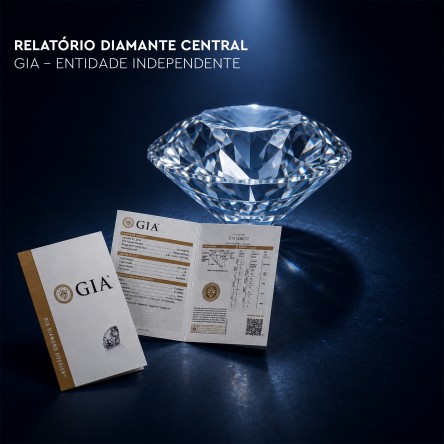
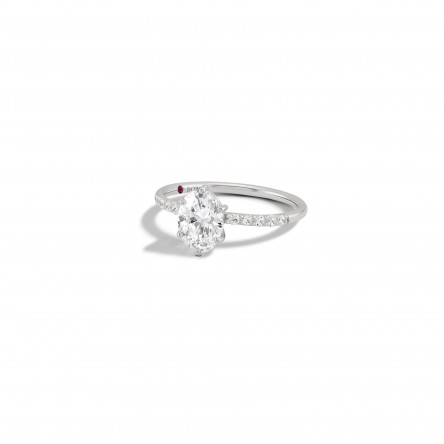
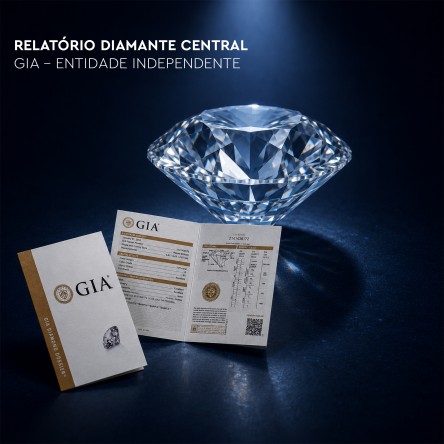
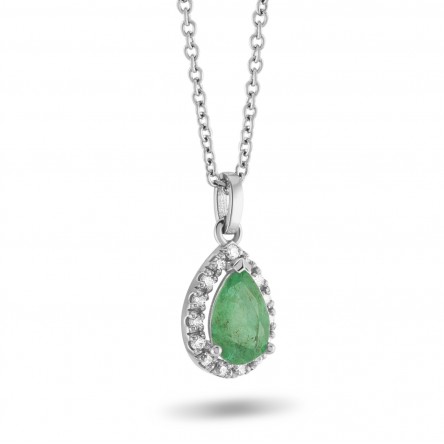
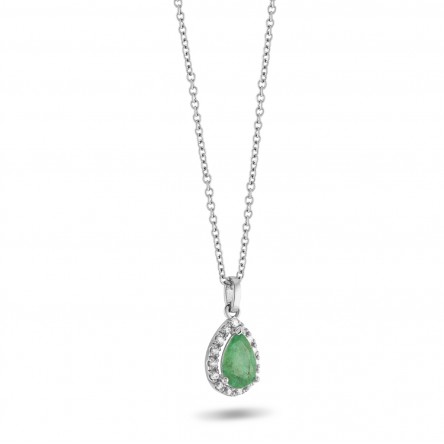
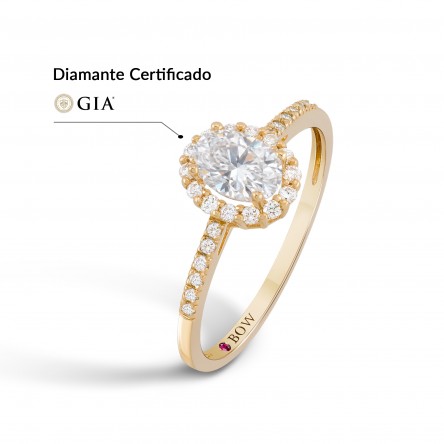
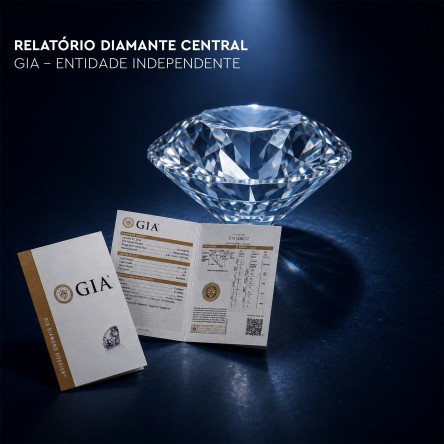
The diamond is the dominant gemstone in engagement rings, both for its brilliance and its symbolism of durability (the hardest known natural gemstone). In 18K gold, diamonds are usually set in prongs (which maximize light exposure) or in a halo (which surrounds the main stone with smaller stones to enhance its apparent brilliance). For stones of significant weight (over 0.40 ct), it is international practice to include GIA or IGI certification, which verifies their technical characteristics — this is precisely the focus of the page dedicated to engagement rings with GIA/IGI-certified diamonds. The emerald (deep green) symbolizes hope and renewal and is an increasingly popular choice for engagement rings among those who want to move away from the traditional diamond. The ruby (intense red) represents passion and eternal love — it is a distinctive and dramatic choice. The sapphire (blue, but also pink or yellow) symbolizes loyalty and wisdom and gained enormous international visibility when Prince William gave his mother's sapphire ring to the Princess of Wales. Topaz (blue, white, or yellow) offers a striking visual presence at a more affordable price than diamonds or sapphires. Aquamarine (soft light blue) is a more understated and elegant gemstone, often associated with serenity. The choice of the main gemstone should reflect the bride's personality and the couple's story — there is no "mandatory gemstone" for an engagement ring, and any of the options above works well technically in 18K gold.
Bow Gold and Diamonds: BlueBird's Flagship Brand for 18K Gold
Bow Gold and Diamonds is BlueBird's premium brand, specializing in 18K gold jewelry with diamonds and precious gemstones, and dominates the engagement jewelry catalog.
Bow Gold and Diamonds is BlueBird's leading brand in the premium jewelry segment. It works exclusively with 18K gold (mainly yellow and white, with some rose gold designs) and offers a catalog focused on rings, earrings, pendants, and bracelets featuring diamonds and precious gemstones. It stands out for the technical quality of its gemstones (with rigorous grading standards characteristic of the premium segment), the breadth of its selection (several dozen designs in each category), and the balance between classic design and contemporary details. For couples who want to match the main gemstone to the bride's birth month, Bow also offers a dedicated birthstones collection, featuring pieces designed to celebrate this symbolic date. Bow's dominant presence in this catalog means that, by choosing a piece from this collection, you are investing in BlueBird's own brand most dedicated to engagement jewelry and special occasions.
Durability of 18K Gold: What to Expect Over the Decades
A piece of 18K gold jewelry retains its material value, color, and structural stability for decades with basic care. Surface scratches can be polished out, and rhodium plating (on white gold) can be renewed.
18K gold is technically designed to last a lifetime — and beyond. The three variations (yellow, white, rose) behave slightly differently over time. 18K yellow gold retains its original color indefinitely, without oxidation or yellowing, and responds well to periodic polishing to restore its shine. 18K rose gold also maintains a stable color, although under extreme conditions (prolonged contact with swimming pool chlorine, for example), very slight oxidation of the copper in the alloy may occur — which can easily be corrected by a jeweler. 18K white gold is the variation that requires the most attention: the rhodium plating responsible for its brilliant white appearance wears off over 2 to 5 years, depending on use, and when the wedding band or ring begins to show a slightly grayish tone, it is a sign that the rhodium plating needs to be renewed. In all three colors, surface scratches are normal with wear and can be polished out by a jeweler. Gemstone settings (prongs, halo, pavé) may require a technical inspection every 5–10 years to ensure they remain secure.
Basic Care for 18K Gold Jewelry
Avoiding contact with harsh chemicals, removing jewelry before intense physical activities, and cleaning it regularly with a soft cloth are the essential precautions for preserving 18K gold jewelry for decades.
The practical rule is simple: 18K gold jewelry should always be the last thing you put on and the first thing you take off. Perfumes, creams, hairsprays, swimming pool chlorine, seawater, and household detergents can affect both the shine of the metal and the gemstone settings — they do not destroy the jewelry, but they accelerate cosmetic wear. For physical activities involving impact (gym workouts, sports, gardening, moving house), removing jewelry helps prevent scratches on the metal and the potential loosening of gemstones. Regular cleaning with a soft cloth maintains its everyday shine; for deeper cleaning, warm water with mild soap and a soft brush (a fine-bristled toothbrush) works well for pieces without delicate gemstones. For jewelry with complex settings or more sensitive gemstones (emerald, opal), it is preferable to visit BlueBird's technical assistance service every few years for professional cleaning and a setting inspection. BlueBird also offers specific jewelry cleaning and care products, suitable for different materials.
Price Ranges for 18K Gold Engagement Jewelry
18K gold jewelry in the engagement category starts at around €600 (rings with small diamonds or other gemstones) and extends beyond €3,000 for pieces featuring larger diamonds or elaborate designs.
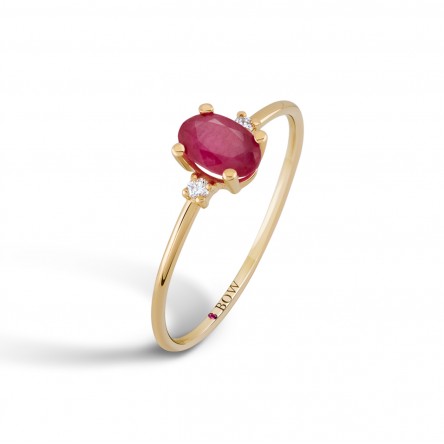
The entry-level price range, from €599 to €1,000, covers a wide selection of 18K gold rings with diamonds in halo or three-stone settings, as well as rings featuring colored gemstones (emerald, ruby, sapphire, topaz, aquamarine) accompanied by smaller diamonds. This range is often the starting point for choosing an engagement ring, with pieces that retain significant material value and high technical quality. The mid-range category, from €1,000 to €2,500, offers larger center diamonds, more elaborate halo settings, or combinations featuring larger gemstones. The premium range, above €2,500, includes pieces with GIA- or IGI-certified center diamonds (commonly from 0.40 ct), more elaborate settings, and striking designs. For higher-value purchases, BlueBird offers installment payment options, particularly useful for premium pieces, allowing payments to be spread over several months without compromising the overall budget for the engagement and wedding period.
How to Buy 18K Gold Jewelry for an Engagement
For engagement rings, purchasing in a physical store is often recommended — it allows you to try on different sizes, compare gold tones in natural light, and benefit from advice from teams experienced in this category. Alternatively, online shopping is available with Express Click & Collect in 2 hours.
The emotional and technical aspects of an engagement ring make purchasing in person particularly useful. At any of the 14 BlueBird stores in mainland Portugal, you can try on different designs, see the three shades of 18K gold in natural light (which can look different depending on the lighting), compare diamond sizes and different settings, and receive expert advice on the technical characteristics of each piece. For those planning a surprise proposal, it is also possible to purchase online with Express Click & Collect in approximately 2 hours, subject to stock availability at the selected location. Online shipping is free for orders over €40 in mainland Portugal and over €100 to the islands. For engagement rings with personalized engraving (inside the band, featuring a date, name, or phrase), the additional processing time is indicated on each product page, and personalized engraved pieces cannot be exchanged or returned as they become unique items. All BlueBird jewelry comes with the brands' official warranties, and the exchange policy allows 30 days for non-personalized pieces purchased in physical stores. BlueBird Card customers also benefit from a €10 Discount Voucher for every €100 in eligible purchases, which can be used on future purchases.
Frequently Asked Questions (FAQs)
It means "18 karats out of 24", meaning 18 parts pure gold in every 24 parts of metal. As a percentage, this is equivalent to 75% pure gold.
The karat (symbol K, used to distinguish gold purity from the "carat" used for gemstones) is the unit that measures the purity of gold in jewelry. Pure gold is 24K (100% gold). By international convention, each gram of jewelry is divided into 24 parts — 18K means that 18 of these parts are pure gold and 6 are other metals (silver, copper, palladium, depending on the color). For every gram of 18K gold jewelry, 0.75 g is pure gold. This is why the price of 18K gold is proportional to the weight of the piece and the international gold market price at the time of purchase.
18K gold is the international standard for fine jewelry with set gemstones because it offers greater mechanical stability than 19.2K gold. Traditional Portuguese 19.2K wedding bands are usually plain, without gemstones, so they do not require the same level of stability.
The difference is both technical and traditional. 19.2K gold contains 80% pure gold and 20% other metals — it is a gold-richer alloy but has slightly lower mechanical strength. For a plain wedding band without gemstones, this lower strength is not a problem (as there are no settings to maintain). For an engagement ring featuring a diamond or another precious gemstone set in prongs or a halo, the additional strength of 18K gold is important to ensure that the setting remains secure over time. This distinction explains why, in Portugal, it is common for couples to have a 19.2K gold wedding band and an 18K gold engagement ring — it is not inconsistent, but rather the appropriate technical use of each alloy.
Yes, and it is the most common combination in Portugal. Although the alloys are different, the color difference is very slight to the naked eye and becomes less noticeable with wear.
Visually, 18K yellow gold and 19.2K yellow gold have very similar tones — 19.2K gold has a slightly richer color due to its higher percentage of pure gold, but the difference is barely noticeable to the naked eye and tends to become less apparent with wear over time. The same applies to white and rose gold. For this reason, the Portuguese tradition of combining an 18K gold engagement ring with a 19.2K gold wedding band (both in the same color) is standard practice and works perfectly well visually. Color consistency (all yellow, all white, or all rose) is more important than using exactly the same alloy.
18K gold is hypoallergenic for the vast majority of people. Allergic reactions are rare and are usually caused by nickel (used in some white gold alloys), rather than the gold itself.
Pure gold is chemically inert and does not cause allergic reactions. Since 18K gold contains 25% other metals, it is theoretically possible to be sensitive to one of these metals — particularly nickel, which may be used in some international white gold alloys. In Portugal and the European Union, specific regulations limit the presence of nickel in jewelry precisely to minimize allergic reactions. Nickel is rarely present in 18K yellow and rose gold — these alloys are made with silver and copper. In 18K white gold, premium brands often use palladium instead of nickel (especially since the 2000s), making the piece hypoallergenic. If you have a known nickel sensitivity, it is worth confirming the specific alloy composition with the store team before purchasing.
Yes. Always. The invoice proves the purchase, the amount paid, and the characteristics of the piece — it is essential for insurance, future valuation, inheritance, and potential resale or reassessment.
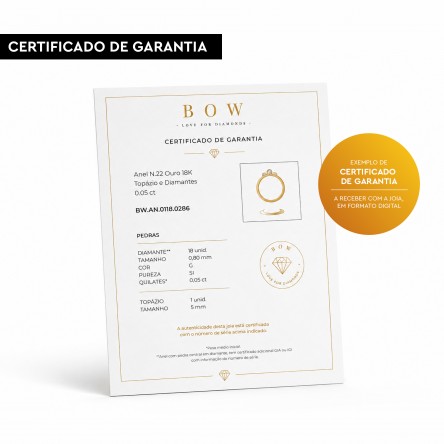
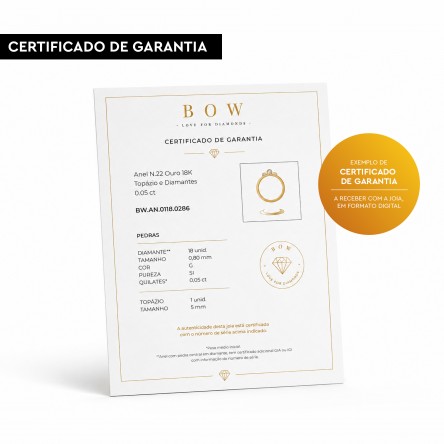
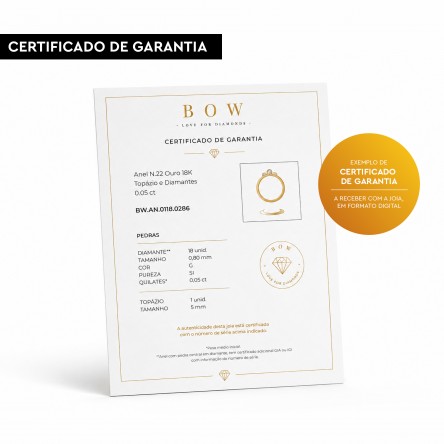
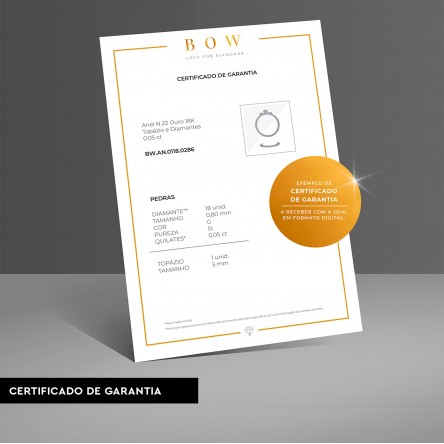
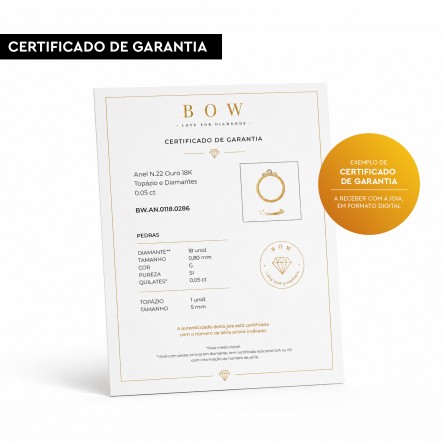
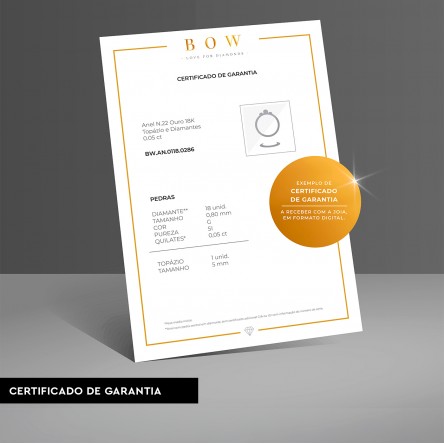
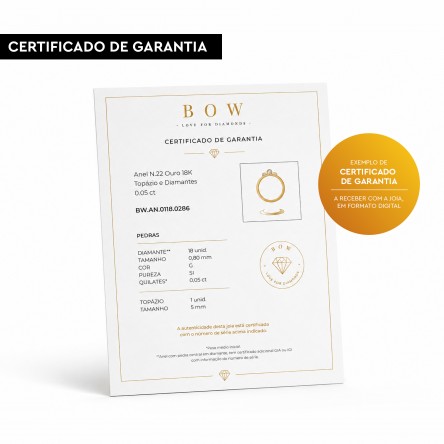
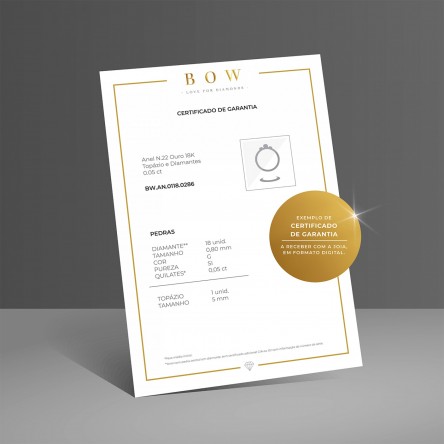
For 18K gold jewelry, especially higher-value pieces (engagement rings, wedding bands, and jewelry with certified diamonds), it is important to keep three documents: the purchase invoice (including the date, price, and description of the piece); the original tag and packaging (which often contain additional technical information); and, where applicable, the diamond certificate (GIA or IGI) for stones over 0.40 ct. These documents are useful at various stages of the jewelry's life: for including the piece in home insurance, for valuation in the event of divorce or inheritance, for resale or trade-in at a jewelry store, and for any situation where proof of authenticity or value is required. In Portugal, properly accredited jewelry retailers (such as BlueBird) follow official hallmarking standards that ensure each gold piece carries the appropriate legal markings — an additional guarantee of authenticity.
Look for the official hallmark engraved on the jewelry itself — in Portugal, this is required by law. 18K gold jewelry carries the "750" mark (indicating 75% pure gold) and the official hallmark of the INCM Assay Office.
In Portugal, the Imprensa Nacional - Casa da Moeda (INCM) is the institution responsible for hallmarking, and any gold jewelry legally sold must carry official markings engraved on the piece itself. These markings include the gold fineness (the percentage expressed in thousandths — 750 for 18K gold, 585 for 14K, and 800 for 19.2K), the manufacturer's or importer's mark, and the official assay office hallmark validating the fineness. The markings are usually engraved on the inside of a ring band, on the clasp of a chain, or on the inner surface of a pendant. This verification is particularly important when buying second-hand jewelry or purchasing from lesser-known jewelry stores; at accredited retailers such as BlueBird, official hallmarking is an integral and guaranteed part of purchasing the piece.
Both 18K gold and platinum are premium choices for engagement rings. 18K gold is more versatile (three colors, high material value, and tradition), while platinum is denser and more durable, but substantially more expensive.
Choosing between 18K gold and platinum ultimately depends on aesthetic preferences and budget. Platinum is a precious metal used in pure form (or as an alloy containing 95% platinum), with a natural white color that does not require rhodium plating and offers superior durability. On the other hand, it is 30% to 50% more expensive than 18K white gold for the same piece, is heavier (approximately 40% denser), and is not available in different colors — only its natural white-gray shade. 18K gold offers three colors (yellow, white, and rose), high material value, cultural tradition in Portugal and most other countries, and an excellent balance between quality and price. For most couples, 18K gold is the appropriate choice. Platinum makes sense in specific situations: for those seeking maximum durability and willing to invest more, or for those who specifically prefer its natural white-gray tone without the maintenance associated with rhodium plating.
Diamonds are the most common gemstones, featured in more than half of the pieces in the catalog, followed by sapphire, emerald, topaz, ruby, and aquamarine.
Diamonds remain the dominant gemstone in engagement rings internationally, and this trend is also reflected at BlueBird. The reasons are both symbolic (the hardest known natural gemstone, associated with permanence) and aesthetic (the brilliance of diamonds is unique among precious gemstones). However, there is a growing trend toward choosing colored gemstones, motivated by individuality, personal symbolism (the bride's favorite color or birth month), or simply aesthetic preference. BlueBird has dedicated pages for emerald rings, ruby rings, and sapphire rings. For those undecided between a diamond and a colored gemstone, it is worth looking at the jewelry the bride already wears, discreetly asking someone close to her, or simply combining both: many 18K gold rings feature a central colored gemstone (emerald, ruby, sapphire, or topaz) accompanied by diamonds in a halo or along the shoulders of the band, offering the best of both worlds.
| Use to view more |
|---|