Is sapphire durable enough for an everyday ring?
Yes. With a hardness of 9 on the Mohs scale, sapphire is the second-hardest gemstone after diamond and is one of the most recommended coloured gemstones for rings intended for continuous wear.
A hardness of 9 means sapphire is highly resistant to everyday scratches — only diamond (hardness 10) and moissanite can scratch it. This durability makes sapphire much more suitable for an everyday engagement ring than softer gemstones such as emerald, aquamarine or topaz. With basic care, a sapphire ring can remain in excellent condition for decades.
What is the difference between sapphire and ruby?
They are the same mineral (corundum). Red corundum is called ruby; all other colours of corundum are called sapphire.
The distinction is purely one of colour. Red corundum, whose colour comes from the presence of chromium, is classified as ruby. Any other colour of corundum — blue, pink, yellow, green, white or orange — is classified as sapphire. This is why “pink sapphires” exist but “red sapphires” do not (those are rubies). In terms of hardness, durability and care, sapphire and ruby behave in exactly the same way because they are the same mineral.
Which gold colour goes with blue sapphire?
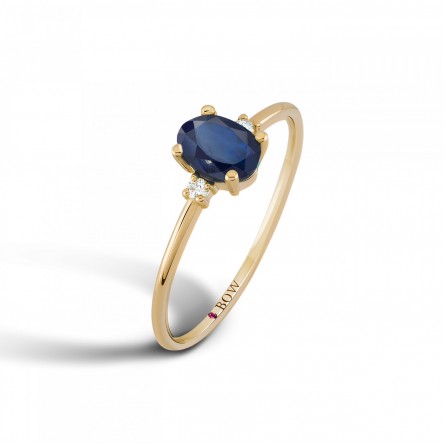
It goes with all three. Yellow gold creates a warm, classic contrast, white gold lets the blue take centre stage with a contemporary effect, and rose gold creates a modern, soft combination.
Versatility is one of blue sapphire’s advantages. With yellow gold, the contrast between cool blue and warm gold is vibrant and traditional. With white gold, the blue becomes the absolute focal point, creating a more modern, minimalist look. With rose gold, the combination is contemporary and distinctive, with the gold’s warm tone softening the blue. The choice should take into account the colour of the other jewellery the bride-to-be wears and her future wedding band.
Are sapphires treated? Does this reduce their value?
Most sapphires on the market are heat-treated to enhance their colour — a standard and accepted practice. Completely untreated sapphires are rarer and more valuable.
Heat treatment (controlled heating of the stone) has been used for centuries to improve or stabilise sapphire’s colour and is a fully accepted practice in the gem industry. The vast majority of sapphires sold are heat-treated, and this does not compromise the stone’s durability or beauty. Sapphires certified as “unheated” are considered rarer and command higher prices, but for the overwhelming majority of engagement rings, heat-treated sapphire offers excellent value for money. If you have questions about a specific stone, the in-store team can help.
Is sapphire cheaper than diamond?
Generally, yes, for comparable sizes and qualities. Sapphire offers a centre stone with greater visual presence at a lower price than an equivalent diamond.
For the same centre stone size, a good-quality sapphire usually costs less than a diamond of equivalent quality, allowing you to choose a more visually striking stone within the same budget — or spend less while maintaining its visual impact. However, exceptional sapphires (intense blue, untreated and from specific origins such as Kashmir or Ceylon) can command very high prices, sometimes exceeding those of diamonds. For a typical engagement ring, sapphire offers a striking, colourful centre stone with excellent value for money.
Which month has sapphire as its birthstone?
Sapphire is September’s birthstone, adding an extra personal touch for brides born that month.
As September’s birthstone, sapphire carries additional meaning for brides born that month — the engagement ring becomes both a symbol of commitment and a celebration of their birth date. BlueBird has a dedicated birthstone collection from the Bow brand for those who wish to explore this symbolism.