What do the three stones in a trilogy ring symbolize?
The most common interpretation is that they represent the past, present, and future of the relationship. Other interpretations associate them with friendship, love, and fidelity.
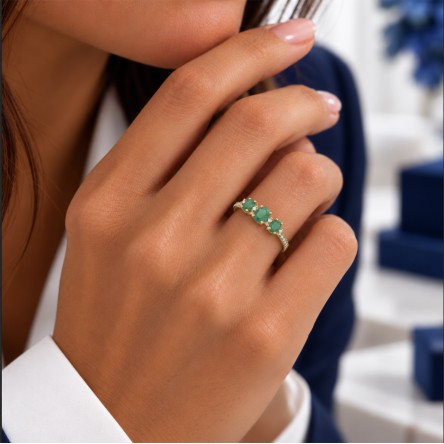
The symbolism of the trilogy is one of the most beautiful in engagement jewelry. According to the most widespread interpretation, the stone on the left represents the past (the history already shared), the central stone represents the present (the love at the moment of the proposal), and the stone on the right represents the future (the life yet to be shared). This narrative makes the three-stone ring a statement about the entire relationship. Some prefer alternative interpretations — friendship, love, and fidelity, or the three pillars of a union — but "past, present, and future" is by far the meaning most commonly associated with this style.
What is the practical difference between three and five stones?
The three-stone ring has greater symbolic meaning (the trilogy) and a more classic appearance; the five-stone ring offers more sparkle and a wider visual presence, creating a more luminous look.
The three-stone ring is the most established and symbolic, with its past-present-future narrative and classic visual balance. The five-stone ring extends this concept, featuring additional stones to create more sparkle and a broader presence on the finger — making it the ideal choice for those who appreciate brighter, more eye-catching designs. In terms of symbolism, the five-stone ring has a less established meaning and is more open to personal interpretation.
Can I have colored gemstones on the sides?
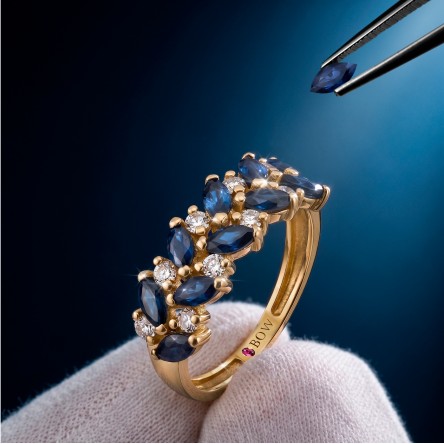
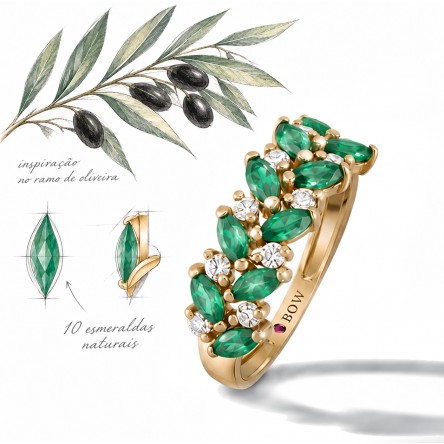
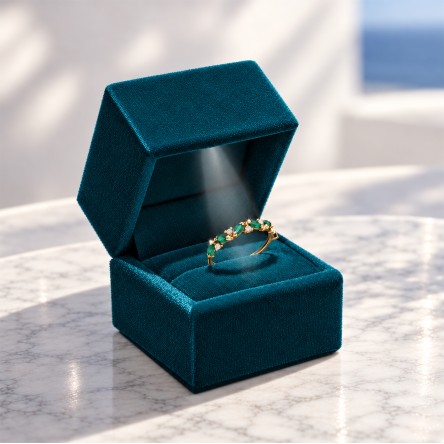
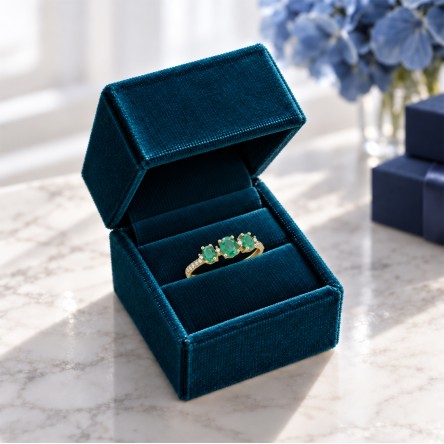
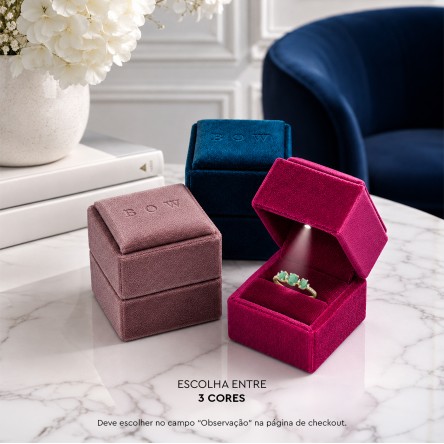
Yes. One of the most beautiful combinations is a central diamond flanked by colored gemstones (sapphire, emerald, ruby), or a central colored gemstone with diamonds on either side.
The three- to five-stone style is particularly well suited to color combinations. You can choose a prominent central diamond with blue sapphires on either side, a central emerald flanked by diamonds, or any other combination. These arrangements add visual contrast and allow for additional layers of symbolism — for example, by using the birthstones of both partners as side stones surrounding a central diamond.
Is the central gemstone always larger?
Often, but not necessarily. There are versions featuring a prominent central gemstone and others with stones of equal size.
The most classic arrangement features a larger central gemstone, flanked by progressively smaller stones, creating a visual hierarchy that draws the eye towards the center. However, there are also versions featuring stones of equal size, creating a more uniform and contemporary effect. The choice influences the character of the ring: a prominent central gemstone gives it more of a "ring with a main stone" appearance, while the uniform arrangement is closer to the Eternity style.
Can a three-stone ring be worn with a wedding band?
Yes. A three-stone ring pairs beautifully with a plain or diamond-set wedding band, creating a harmonious combination on the same finger.
As with any engagement ring, a three-stone ring can be worn together with a wedding band on the same finger. The horizontal arrangement of the three stones complements a plain or diamond-set wedding band, creating a balanced combination. It is worth considering the height of the central gemstone when planning this pairing to ensure that both rings fit comfortably together.