Is emerald durable enough for an everyday ring?
With proper care, yes, but it is more fragile than sapphire or diamond. It has a hardness of 7.5–8, is resistant to scratches, but is more sensitive to direct impacts due to its internal inclusions.
Emerald can be worn in an engagement ring every day, but it requires more attention than harder gemstones. It resists everyday scratches well, but can chip when subjected to strong impacts, so it is advisable to remove the ring during strenuous manual activities and sports. For those with a very active lifestyle or who work with their hands, sapphire (hardness 9) may be a more durable colored gemstone alternative. For most people, with basic care, emerald is perfectly suitable for everyday wear and can remain beautiful for decades.
Why does emerald have "spots" or internal marks?
These are natural inclusions called "jardin", considered part of the emerald's identity and evidence of its natural origin — they are not defects.
Unlike diamonds, where the absence of inclusions is highly valued, internal inclusions in emeralds (known as "jardin") are expected and accepted as part of the gemstone's nature. An emerald that is completely clear and free of inclusions is extremely rare and may even raise suspicions that it is synthetic or another gemstone. Inclusions act as a unique fingerprint for each emerald. What is most valued in an emerald is primarily the intensity and uniformity of its green color, rather than its clarity.
Can I clean my emerald ring at home?
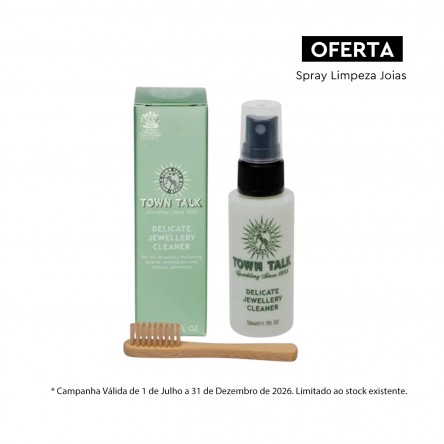
Yes, but only with a soft, damp cloth and mild soap. Never use ultrasonic cleaning, steam, or harsh chemicals.
Emeralds are treated with oil or resin to fill surface-reaching fractures, and aggressive cleaning methods (ultrasonic cleaning or steam) can remove this treatment and even worsen existing fractures. Safe cleaning involves using a soft cloth slightly dampened with warm water and mild soap, followed by gentle drying. For deep cleaning or renewal of the oil treatment, it is preferable to seek specialized technical assistance.
Are emeralds treated? Is this normal?
Yes. The vast majority of emeralds are treated with oil or resin to fill fractures and improve their appearance — this is a standard and accepted practice in the industry.
Oil treatment (traditionally using cedarwood oil) has been used for centuries to fill natural surface-reaching fractures in emeralds, improving their transparency and apparent color. It is a completely accepted and expected practice — the overwhelming majority of emeralds on the market are treated in this way. The treatment may need to be renewed over the years, which is a normal part of gemstone maintenance. Untreated emeralds are rare and command significantly higher prices.
Which gold color goes best with emerald?
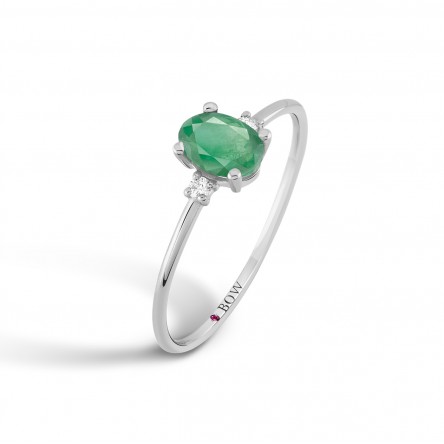
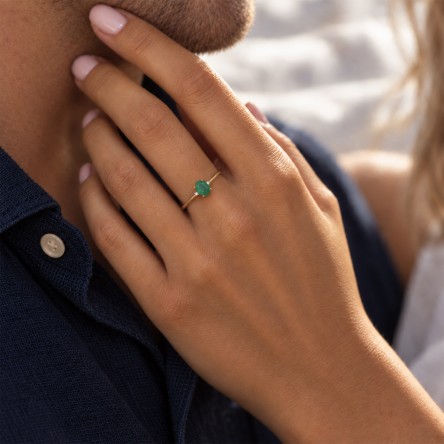
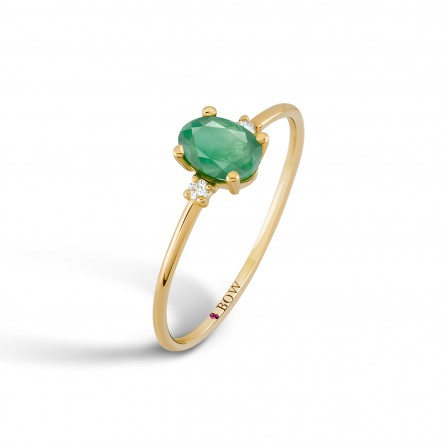
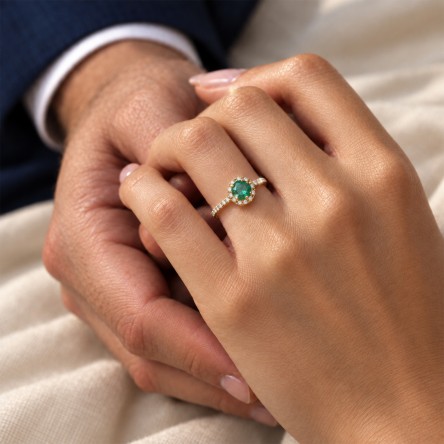
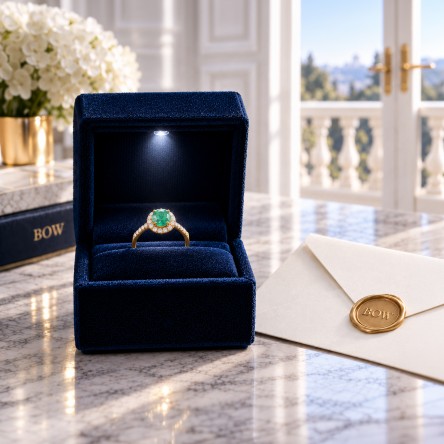
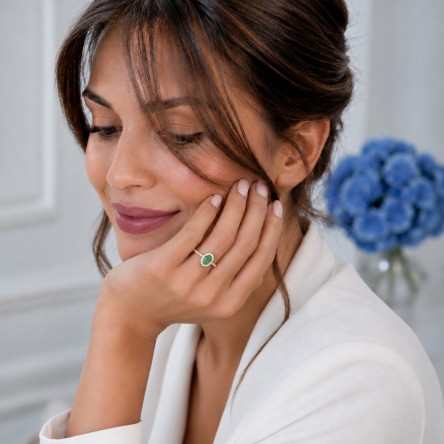
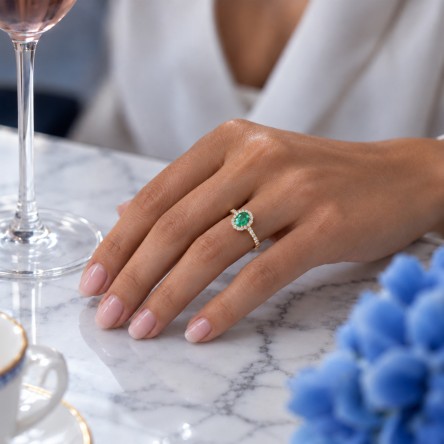
Emerald pairs particularly well with yellow gold (a classic, warm contrast) and white gold (a contemporary effect that allows the green to stand out).
The combination of emerald and yellow gold is historic and luxurious — green and gold create a warm, rich contrast that has been used since ancient times. White gold offers a more modern and neutral look, allowing the green to take center stage. Rose gold is less common with emerald, but can create original and contemporary combinations. The choice should take into account the bride's personal style and the other jewelry she wears.
What month's birthstone is emerald?
Emerald is the birthstone for May, adding a personal touch for brides born in that month.
As May's birthstone, emerald has an additional meaning for brides born during this month — the ring becomes both a symbol of commitment and a celebration of their birth month. BlueBird offers a dedicated collection of birthstones from the Bow brand.