Does the halo really make the central diamond look bigger?
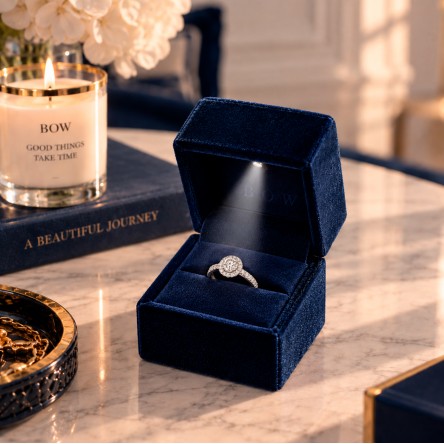
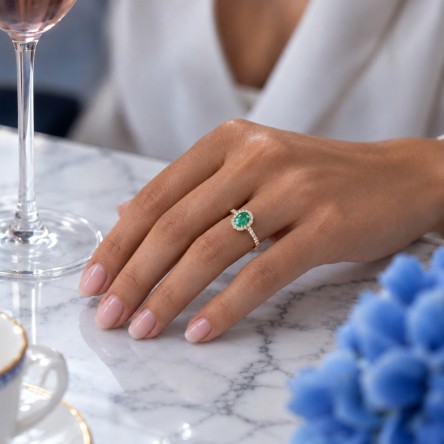
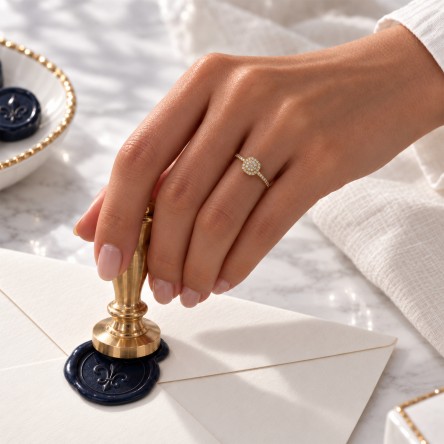
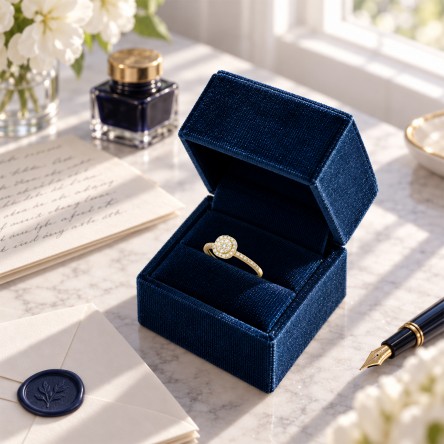
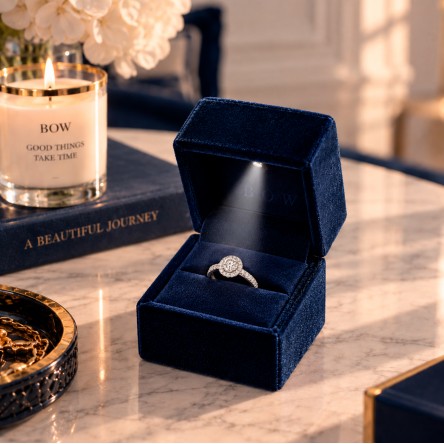
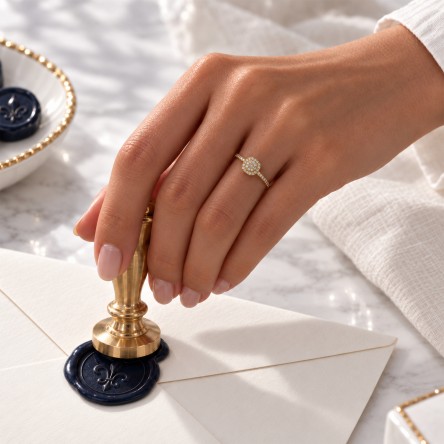
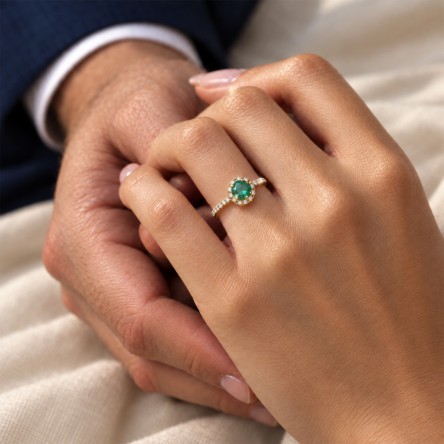
Yes. The circle of small gemstones surrounding the center creates a continuous sparkling outline that visually enlarges the main stone — a diamond with a halo appears considerably larger than it would on its own.
This is precisely the main appeal of the halo style. The circle of small gemstones eliminates the visual "boundary" between the central stone and the band, creating a larger, continuous sparkling surface. As a result, the eye perceives the central-stone-and-halo combination as a single large, brilliant area. In practice, a central diamond with a halo can appear as large as a diamond 50% to 100% larger when worn alone, depending on the halo design. This is why the halo is one of the best strategies for maximizing visual impact within a budget.
What is the difference between a single halo and a double halo?
A single halo features one circle of gemstones surrounding the center; a double halo features two concentric circles, creating an even larger and more dramatic effect.
The single halo is more classic, balanced, and versatile — a single row of small gemstones surrounds the central stone. The double halo adds a second circle, further enhancing the visual presence and sparkle, with a bolder and more luxurious appearance. The double halo creates a ring that looks larger on the finger, which may be ideal for those seeking maximum impact but less suitable for those who prefer a more understated look. The choice mainly depends on personal style and the desired effect.
Is the halo a modern or classic style?
Both. It has its roots in vintage jewelry (Edwardian and Art Deco), but remains one of the most popular and contemporary styles — offering timeless elegance.
The halo has a historical heritage dating back to the early 20th century, particularly the Edwardian and Art Deco periods, when concentric and geometric gemstone settings reached a high level of sophistication. These origins give it a vintage and glamorous character. At the same time, the style has been continuously reinvented and is now one of the most popular choices internationally, with highly contemporary variations. This dual nature — both classic and modern — makes the halo a timeless style that is unlikely to look outdated.
Does the halo protect the central gemstone?
To some extent, yes. The surrounding circle of metal and gemstones acts as a barrier that helps protect the main stone from impacts from the sides.
Although the halo's primary purpose is aesthetic, the circle surrounding the central gemstone also provides some mechanical protection — by creating a raised "wall" of metal and gemstones around the center, it reduces the main stone's exposure to direct impacts from the sides. This does not make the ring indestructible, but it is an advantage compared with a solitaire featuring a highly exposed gemstone. As with any ring featuring multiple small set stones, it is worth having the halo settings inspected periodically to ensure that none of the small gemstones become loose over time.
Can I have a halo ring with a colored central gemstone?
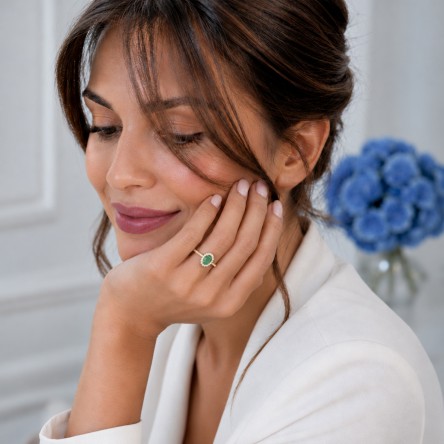
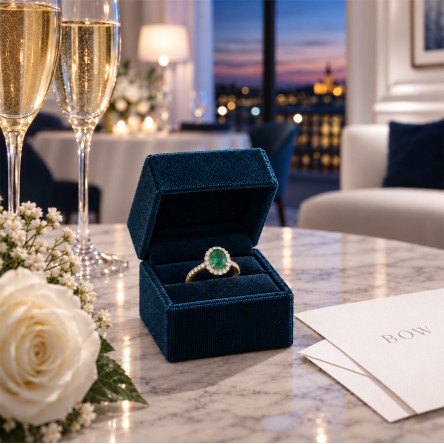
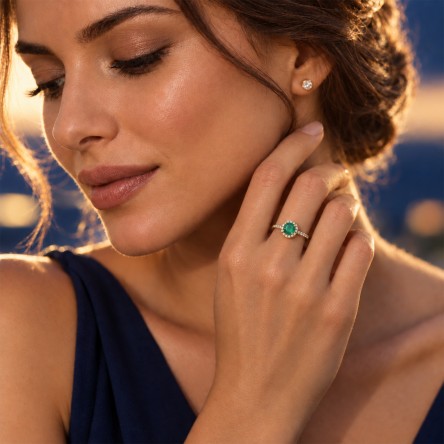
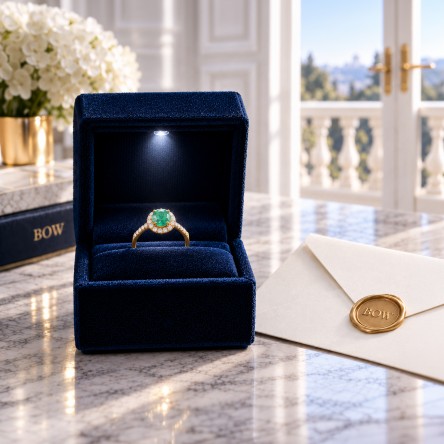
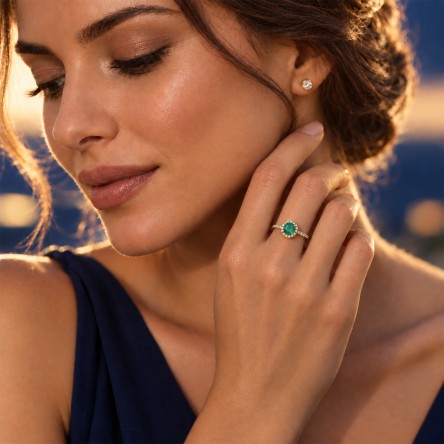
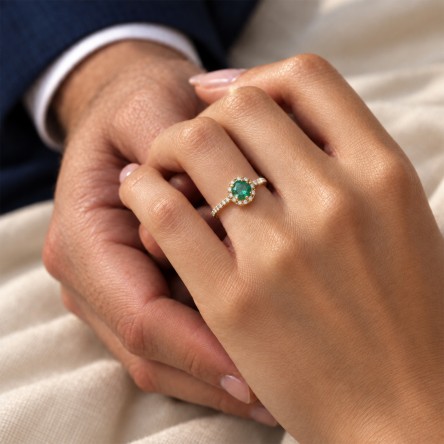
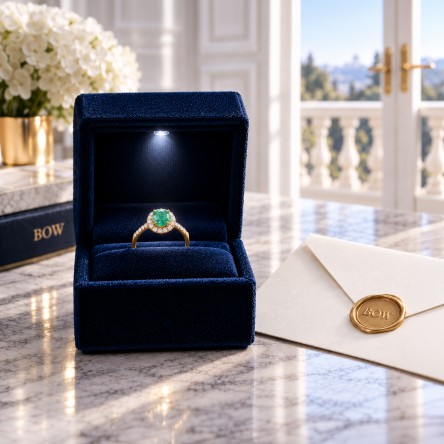
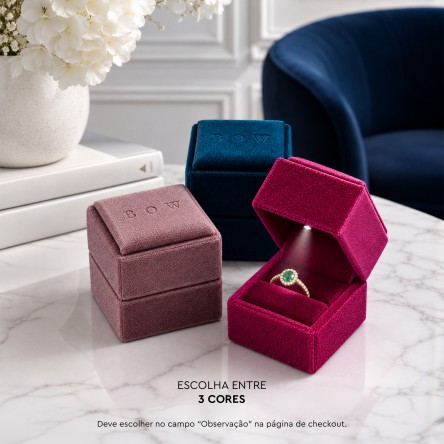
Yes, and it is one of the most stunning combinations. A central colored gemstone (sapphire, emerald, ruby) surrounded by a diamond halo intensifies its color and creates a rich contrast.
The halo is one of the best styles for showcasing a colored gemstone. The circle of colorless diamonds surrounding a blue sapphire, green emerald, or red ruby creates a color contrast that intensifies the central gemstone's color and makes it stand out even more. This was the principle behind Princess Diana's iconic sapphire ring, now worn by the Princess of Wales. It is a combination that brings together the visual impact of the halo with the distinctive character of a colored gemstone.